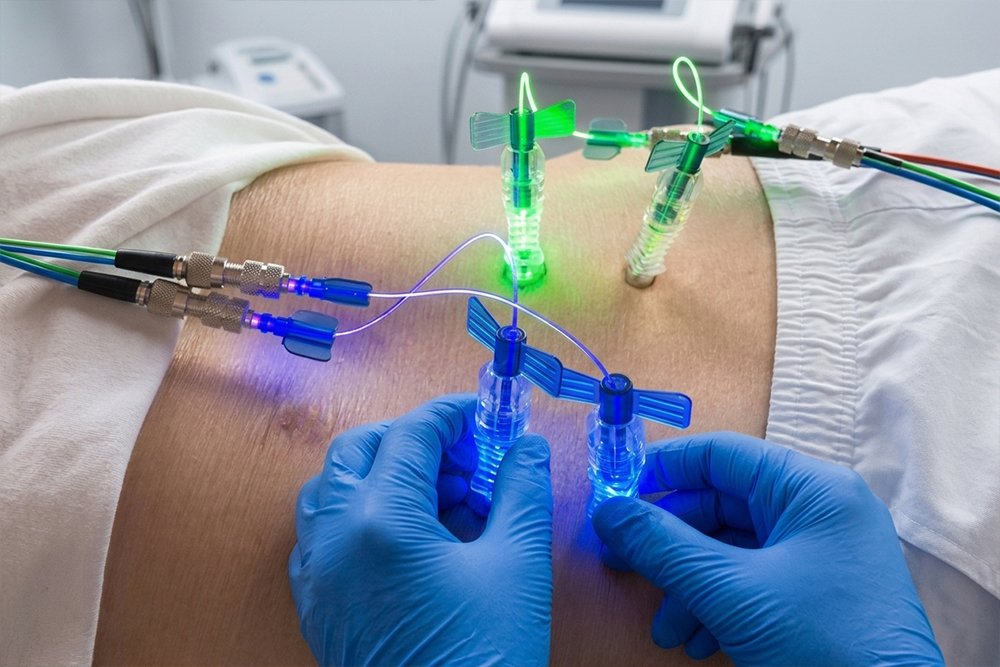
Low Level Laser Light Therapy
Low Level Laser Therapy (LLLT), also known as photobiomodulation or cold laser therapy, uses specific wavelengths of light to penetrate tissue and stimulate cellular repair. This non-invasive treatment enhances mitochondrial function, increases ATP production, and promotes healing at the cellular level — without heat, pain, or downtime.
What is Low Level Laser Light Therapy?
Low Level Laser Therapy (LLLT), also referred to as photobiomodulation or cold laser therapy, is a non-invasive medical treatment that uses specific wavelengths of light — typically in the red to near-infrared spectrum (600–1000nm) — to penetrate tissue and stimulate biological processes at the cellular level. Unlike surgical or thermal lasers, LLLT produces no heat and causes no tissue damage, making it a safe, painless option for a wide range of conditions.
🔬 The Science of Photobiomodulation
At the cellular level, light energy is absorbed by mitochondrial chromophores — primarily cytochrome c oxidase — triggering a cascade of metabolic events that increase ATP (adenosine triphosphate) production, enhance cellular respiration, and promote the release of beneficial growth factors and cytokines.
This process, known as photobiomodulation, effectively "recharges" cells that are stressed, damaged, or underperforming. By restoring optimal cellular energy levels, LLLT accelerates tissue repair, reduces inflammation, and alleviates pain — all without pharmaceuticals or invasive procedures.
Why Choose Cellf Solutions for Laser Therapy?
- FDA-cleared laser technology for proven safety and efficacy
- Non-invasive, pain-free treatment with zero downtime
- Performed at our partner clinic — Divine Plastic Surgery & Stem Cell Clinic in Sanur, Bali
- Customized treatment protocols based on your specific condition
- Can be combined with other regenerative therapies for enhanced results
How Laser Therapy Works
Step 1: Light Emission (600–1000nm Wavelengths)
Specific wavelengths of red and near-infrared light are emitted from a handheld laser device, directed at the target treatment area. These wavelengths are precisely calibrated to penetrate skin, muscle, and even bone tissue.
Step 2: Photon Absorption by Mitochondria
Light photons penetrate tissue and are absorbed by mitochondrial chromophores — specifically cytochrome c oxidase within the mitochondrial electron transport chain. This is the key biological target of photobiomodulation.
Step 3: Increased ATP Production
Absorbed light energy stimulates the mitochondria to produce more ATP — the primary energy currency of cells. Increased ATP availability powers cellular repair processes, protein synthesis, and tissue regeneration.
Step 4: Enhanced Cellular Repair & Reduced Inflammation
Elevated ATP levels trigger a cascade of beneficial effects: reduced oxidative stress, decreased inflammatory mediators, increased blood flow (via nitric oxide release), and accelerated collagen synthesis and wound healing. The result is faster recovery with reduced pain and swelling.
Key Benefits of Laser Light Therapy
- Reduced Inflammation: Significantly lowers inflammatory markers, providing relief for chronic inflammatory conditions
- Pain Relief: Effective for both acute and chronic pain — including joint pain, back pain, and neuropathic pain
- Accelerated Wound Healing: Stimulates fibroblast activity and collagen production for faster tissue repair
- Improved Circulation: Promotes vasodilation and angiogenesis, enhancing blood flow to treated areas
- Skin Rejuvenation: Boosts collagen synthesis, reduces fine lines, and improves skin tone and texture
- Muscle Recovery: Reduces post-exercise muscle soreness and speeds up recovery from sports injuries
- Nerve Regeneration: Supports peripheral nerve repair and reduces neuropathic symptoms
- Non-Addictive: Provides effective pain management without the risks associated with long-term medication use
Safety & Contraindications
Low Level Laser Therapy has an excellent safety profile, backed by decades of clinical research and worldwide use. Because LLLT is a non-thermal (cold) laser that does not heat tissue, it carries none of the risks associated with surgical or thermal laser procedures.
Non-Thermal Technology
LLLT operates at power levels far below those that produce tissue heating. The treatment is classified as non-thermal and non-destructive — it stimulates biological processes rather than ablating or damaging tissue.
No Known Side Effects
When administered properly by trained professionals, LLLT has no known systemic side effects. Some patients may experience mild, temporary tingling at the treatment site. The treatment is painless and does not require anesthesia.
Global Track Record
Photobiomodulation has been used clinically for over 50 years, with thousands of peer-reviewed studies supporting its safety and efficacy across a wide range of medical and aesthetic applications.
Contraindications
LLLT is not recommended directly over the eyes, over known malignancies, during pregnancy (as a precaution), or over the thyroid gland. A comprehensive pre-treatment assessment ensures the therapy is appropriate for your individual circumstances.
Disclaimer: When accessing the material in this website it is advised that you seek Physician advise before making any conclusions. The website contains the opinions of multiple authors and is intended for educational purposes only with the understanding the website is not providing any professional services.